Soil Deposit Permit Agrologist Report, Richmond
The Professional Agrologist report, fill certification and farm plan that Richmond's Soil Deposit and Removal Bylaw 10200 requires for fill on ALR land, prepared by a Richmond-based P.Ag.
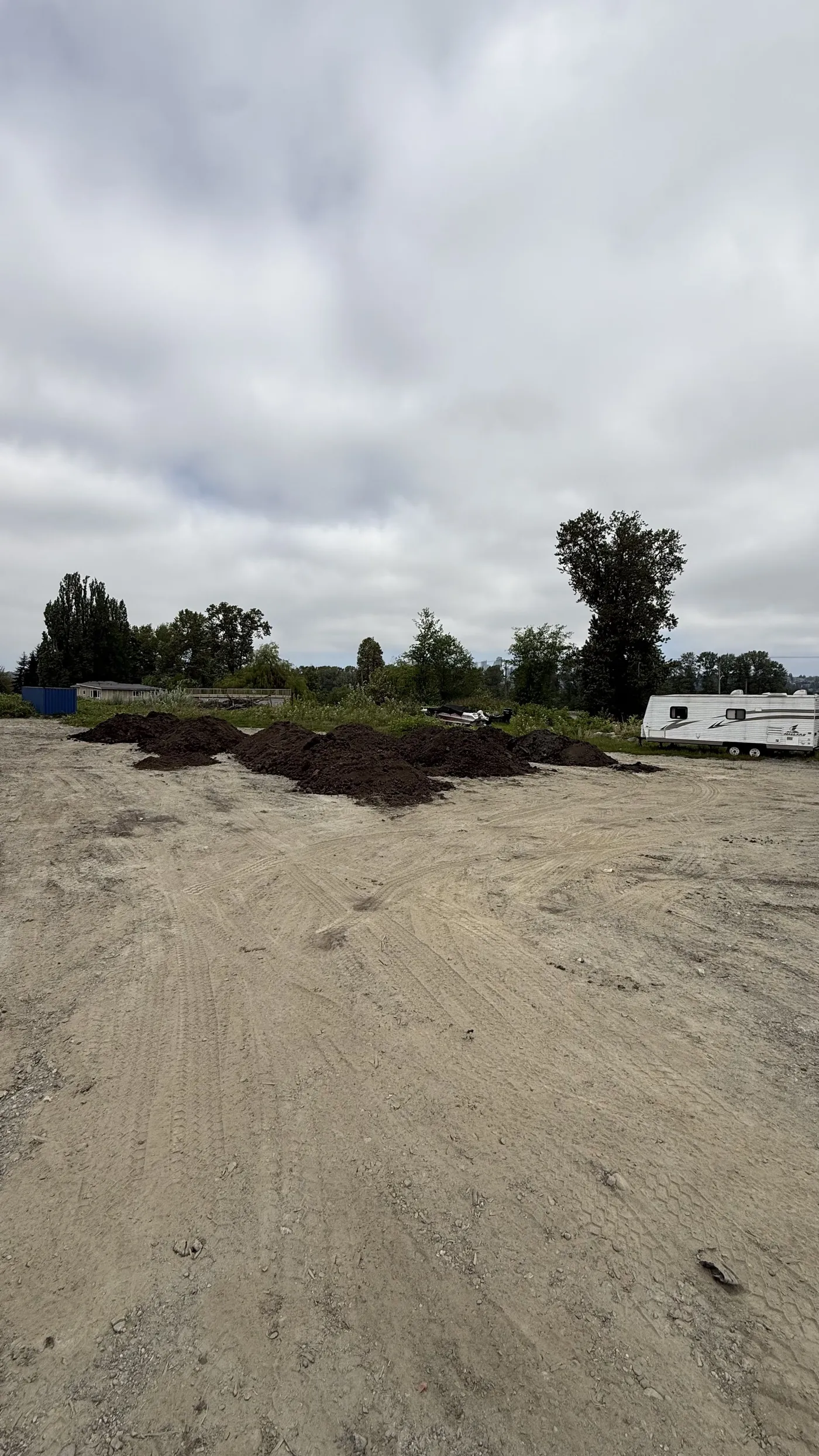
Richmond's Soil Deposit and Removal Bylaw 10200 requires a City permit for any soil deposit or removal on ALR land, issued only after the Agricultural Land Commission has approved, and it names the documents a Professional Agrologist must supply: the report and farm plan, and the certification that the fill meets the criteria for its intended use. We prepare all of it from one desk in Richmond.
What's included
- The Professional Agrologist report Bylaw 10200 calls for on ALR land: soil characteristics and current agricultural capability, the placement volumes, depths and final grades, and the farm plan elements the General Manager requires (drainage, irrigation, operator, planting plan, improvement cost estimate and project income statement)
- The Professional Agrologist's certification that the soil to be deposited meets the criteria for the intended use at the end site, with the source-site locations the application must list
- The ALC notice of intent or soil or fill use application that has to be approved before the City can issue the permit
- Council report support where the deposit exceeds 600 cubic metres
- Agrologist-of-record oversight and the closure sign-off once the permit issues, scoped separately
Two approvals, one file
Fill on ALR land in Richmond runs through two authorities, and they are sequenced. The Agricultural Land Commission comes first: the Act prohibits placing fill on agricultural land unless the regulations permit it or the Commission has been notified and has approved. Richmond’s Soil Deposit and Removal Bylaw 10200 then requires a City permit for any deposit on ALR land, and section 3.4.2 says the City will not issue that permit until the Commission has granted its approval.
The agrologist’s work is what both files are built on. This page is about the Richmond permit; the Commission side is covered under ALC applications, and the general picture in our guide to soil deposit and removal permits.
What the bylaw asks the agrologist for
Bylaw 10200 is unusually explicit. Section 4.1.1(h) requires, on ALR land, a report prepared by a Professional Agrologist, defined as an agrologist registered and in good standing with the BC Institute of Agrologists. The General Manager decides which of the listed items the file needs, and the list includes the soil characteristics and current agricultural capability, and a farm plan covering drainage, irrigation, the proposed agricultural operator, a planting plan, an agricultural improvement cost estimate and a project income statement over five to ten years.
Section 4.1.1(i) adds a second document: a certification from a Professional Agrologist that the soil to be deposited meets the criteria for the intended land use at the end site. Section 4.1.1(j) requires the location of the source sites. Together those two are the source-site sign-off memo contractors ask us for, written in the bylaw’s own terms.
The City’s application checklist adds that the agrologist report should follow the Commission’s criteria for agricultural capability assessments, which is ALC Policy P-10. We write to that policy as a matter of course.
Volumes, Council and the Commission’s exemptions
Three thresholds decide the shape of the file. On ALR land the Commission’s authorization is not needed where the work fits an exemption in the ALR Use Regulation: for a farm structure or principal residence, an area of 1,000 square metres or less with the floodplain elevation rules met; for an existing farm road, no more than 50 cubic metres of soil or fill per 100 metres of road per year. Beyond those, a notice of intent or a soil or fill use application goes to the Commission. On the City side, section 3.5.1 sends any deposit or removal over 600 cubic metres to Council for a resolution.
We confirm which of those apply at scoping, because they decide whether the file is a short one or a Council report, and because the Commission has been refusing small accessory-building pad and farm-road proposals more often this year than last. An honest read at the start is cheaper than a refusal.
What we deliver, and how it runs
The report, the certification and the Commission package come from one practice, so they tell one story. We start with the desk review (title, ALR status, zoning and the home plate, mapped soils, any prior City or Commission file on the parcel), then one site visit with test pits marked by us and dug by the owner’s machine or ours. The Commission’s notice or application goes in first, through the owner’s own portal account. The City file follows it, with the report re-cut to the bylaw’s form.
Once the permit issues, most Richmond permits carry conditions naming a qualified professional for placement. We take that agrologist-of-record role through to the closure sign-off, and where a file has gone wrong before we arrived, the reclamation and closure work starts from the same site assessment.
Titrin AgriSoil Solutions is based in Richmond, and Tish Titina, P.Ag., M.Sc., worked inside both the City and the Commission before founding the practice. Richmond’s soil bylaw officers see our reports on live files every month.
For a Delta or Langley parcel, the rules differ: see soil deposit permits in Delta and in the Township of Langley. For a Richmond building permit that needs a farm plan, see farm plans for Richmond building permits.
If you have a Richmond parcel and fill to place or remove, send us the address, the volume and any letter from the City. We scope within one business day.