Monitoring & Agrologist-of-Record
The named, accountable Professional Agrologist on your file, ongoing soil and fill monitoring, placement oversight, and stamped P.Ag. sign-offs that satisfy ALC and municipal approval conditions.
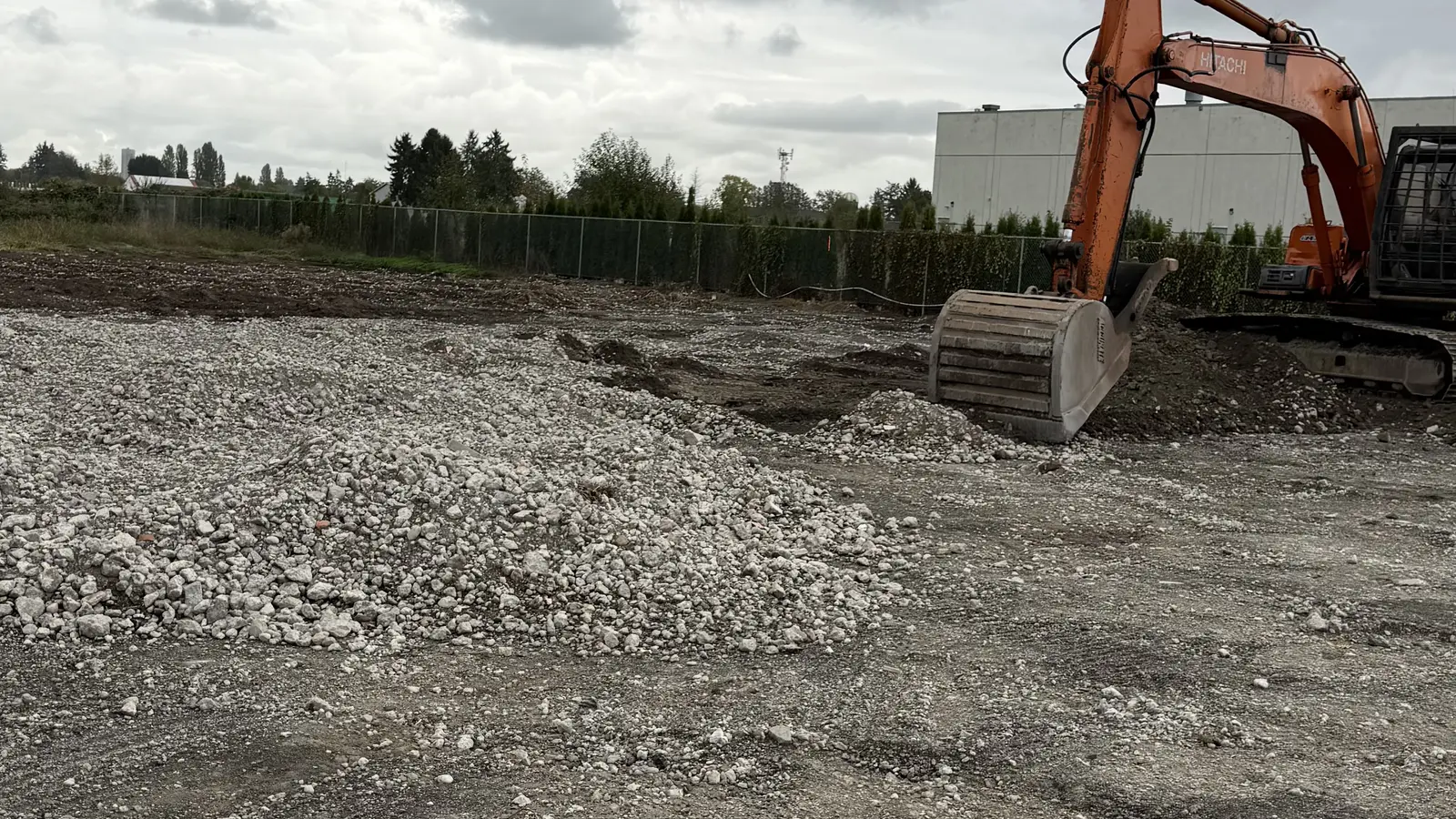
More and more ALC and municipal approvals name a qualified professional to monitor the work and sign off that it was done to standard. We take that role, the agrologist-of-record on your file. We oversee soil and fill placement, run the scheduled monitoring visits and reports, check the work against your approval conditions, and provide stamped P.Ag. sign-offs at milestones and at closure.
What's included
- Agrologist-of-record / qualified-professional (QP) appointment as the named, accountable professional on your ALC or municipal file
- Soil and fill placement oversight during active works, with the AOR present at the points that matter
- Scheduled monitoring visits on a defined frequency, with photo-documented field records and sample logs for the regulatory file
- Periodic monitoring reports written to the standard the ALC and municipal reviewers expect
- Conformance checks comparing work as built against the specific conditions of your approval, permit, or management agreement
- Stamped P.Ag. letters, memos, and sign-offs at agreed project milestones
- P.Ag.-stamped closure sign-off confirming the work met its conditions so the file can be closed
- Qualitative observation of site and drainage conditions and their agricultural implications (detailed drainage design deferred to a qualified engineer)
- Direct liaison with ALC compliance staff and municipal officials as the professional on the file, with R.P.Bio. coordination where riparian or biological conditions apply
What monitoring and the agrologist-of-record role is
When the Agricultural Land Commission (ALC) or a municipality approves soil or fill work, the approval rarely comes without strings: the work must be monitored as it happens, reported on along the way, and signed off by a named qualified professional once done. That professional is the agrologist-of-record (AOR), the person the regulator holds accountable for confirming the work was carried out to standard.
Titrin AgriSoil Solutions takes that role. As your agrologist-of-record, Tishtaar (Tish) Titina, P.Ag., M.Sc., is the named, accountable Professional Agrologist on the file from the day work starts through to closure. We oversee soil and fill placement at the points that matter, run scheduled monitoring visits, write the reports for the regulatory file, check the work against your specific approval conditions, and provide stamped P.Ag. sign-offs at agreed milestones and at the end. It is the part of a project that turns an approval on paper into a defensible, documented record the regulator will accept.
This is ongoing, accountable work, not a single report written on a single day. A one-off assessment captures conditions at one moment; the AOR role runs the length of the project, which is precisely why regulators increasingly insist on it.
When you need an agrologist-of-record
You need a named qualified professional or agrologist-of-record when it is written into your approval, and these days it often is. Bring Titrin in as AOR when any of the following applies:
- An ALC decision approving fill placement, soil removal, or a non-farm use on Agricultural Land Reserve (ALR) land makes ongoing monitoring and a named qualified professional a condition of proceeding.
- A municipal soil-deposit permit or bylaw requires placement oversight, periodic reporting, and a professional sign-off at completion.
- A Reclamation Management Agreement or similar instrument commits you to monitored, signed-off work.
- Your approval letter references monitoring, periodic reports, a qualified professional (QP), or sign-off at closure.
- Fill is being placed on agricultural land and you want a credible, continuous record of how it was sourced, placed, and confirmed, rather than reconstructing one afterward.
The common thread is a regulator who wants more than the owner’s word. They want an independent, accountable professional watching the work and putting a stamp behind it. That is the AOR.
How Titrin approaches the role
The first step is to read your approval closely. Conditions of approval are specific, what must be monitored, how often, what each report must demonstrate, and what the closure sign-off must confirm. Titrin translates those conditions into a clear monitoring plan, so everyone, including your contractor, knows what the file requires before the first load of soil moves.
Placement oversight. During active works, Titrin provides oversight at the points that matter, confirming material is placed correctly and catching issues while they are still cheap to fix, not after they are buried under later lifts.
Scheduled monitoring visits. We attend on a frequency agreed at the outset, tied to placement milestones, a calendar schedule, or both, per your approval and the pace of the work. Each visit produces a photo-documented field record and, where relevant, sample and test-pit logs.
Conformance checks. At each stage we compare the work as built against your approval conditions, so non-conformance is caught early rather than discovered at the end.
Reporting. Titrin writes periodic monitoring reports to the standard ALC and municipal reviewers expect, clear statements of what was observed and whether the work conforms, building the record that supports closure.
Milestone and closure sign-offs. At agreed milestones and at completion, Titrin provides stamped P.Ag. letters and a closure sign-off confirming, on the strength of the monitoring record, that the work met its conditions so the file can be closed.
Throughout, we describe site and drainage conditions qualitatively and explain their agricultural implications. Detailed drainage, grading, or structural design is the work of a qualified engineer, we say plainly where that line sits and coordinate the hand-off. Where riparian or biological conditions apply, Titrin works alongside Registered Professional Biologist (R.P.Bio.) partners. The earthworks are carried out by your contractor; our role is to observe, monitor, document, and sign off.
Why Titrin
The value of an agrologist-of-record comes down to judgement and accountability. On both, Titrin is built for the role.
- A regulator’s-eye view. Tish Titina, P.Ag., spent more than a decade across the ALC and the City of Richmond before founding Titrin. Your reports and sign-offs are prepared by someone who has sat on the regulator’s side of the table and knows what makes a submission credible, and what gets it sent back.
- Direct access to the P.Ag. The professional who oversees the work and signs the closure memo is the one named on your file. There is no hand-off to a junior, and the stamp reflects the site as actually built.
- One accountable point of contact. Titrin liaises with ALC compliance staff and municipal officials as the professional on the file, so you are not interpreting regulatory language alone.
- Full-cycle delivery. Monitoring rarely stands alone. Titrin can connect the AOR role to the fill quality assessment, farm plan, or ALC application behind it, and, where a project needs construction delivery, coordinate with our in-house licensed builder and general contractor.
Serving Richmond, the Fraser Valley, Vancouver Island, and the wider Metro Vancouver region, Titrin acts as the accountable agrologist-of-record on soil and fill files where the regulator wants to know, with confidence, that the work was done to standard. If your approval names a qualified professional, book a consultation.