May 6, 2026 · 5 min read
Bringing Fill Onto ALR Land in BC: What's Allowed and What Isn't
Bringing fill onto ALR land in BC is regulated, not a free-for-all. A guide to clean fill, NOIs vs. Soil or Fill Use, and Richmond soil-deposit rules.
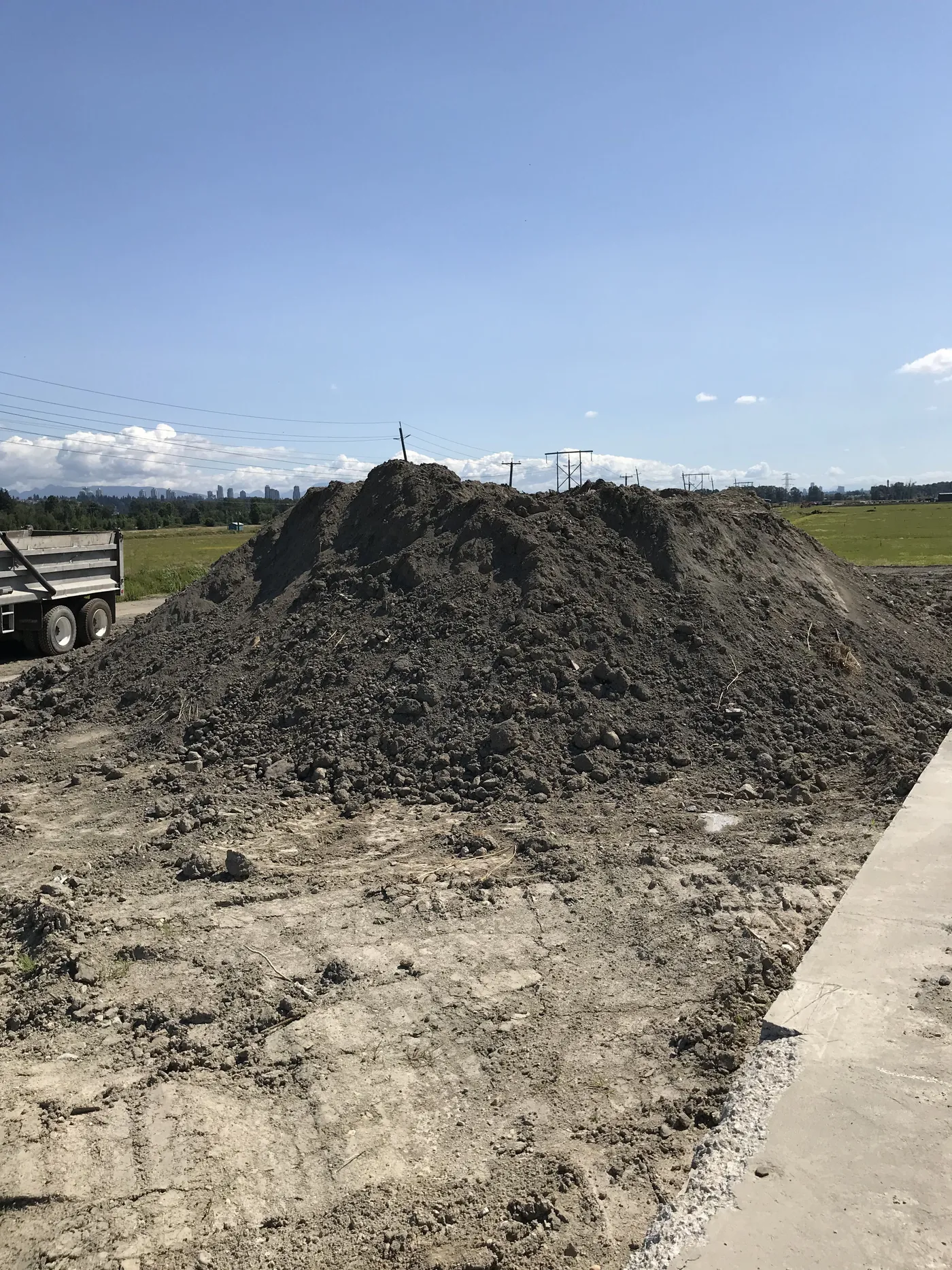
If you own or develop land in British Columbia’s Agricultural Land Reserve (ALR), you may assume that bringing in a few truckloads of soil to level a low spot or build up a yard is a simple matter. It usually isn’t. Moving fill onto ALR land is one of the most closely regulated things a landowner can do, and getting it wrong can mean stop-work orders, remediation at your own cost, or having to dig out material you’ve already paid to place.
This is a plain-language overview of what’s allowed, what isn’t, and why the rules exist. It is educational only; it is not a substitute for advice from a Professional Agrologist on your specific parcel.
Why moving fill onto ALR land is regulated at all
The Agricultural Land Reserve exists to protect a finite resource: farmland. Across Metro Vancouver and the Fraser Valley, much of the best growing soil sits under development pressure, and once it’s degraded it doesn’t come back.
Fill is regulated because the wrong material, placed the wrong way, permanently harms agricultural capability. Importing rubble, construction debris, low-quality subsoil, or contaminated material can ruin drainage, smother topsoil, and render land unfarmable. Even “clean-looking” soil can be the wrong texture or carry concerns from a prior land use. So the Agricultural Land Commission (ALC), and, separately, your local government, both take an interest in what lands on protected soil.
The practical upshot: on ALR land, where your fill comes from and whether it’s suitable is no longer a private decision.
Notice of Intent vs. a Soil or Fill Use application
A common point of confusion is the difference between the two main ALC pathways for soil and fill. At a high level:
- A Notice of Intent (NOI) is a streamlined notification for certain defined, smaller-scale activities, often soil or fill movement within set limits. The Commission wants to be informed and may attach conditions, but a full discretionary decision isn’t triggered.
- A Soil or Fill Use application is the route for larger or more complex proposals. It’s a discretionary review, where the Commission weighs your proposal against the agricultural interest before deciding.
These two routes require very different packages, and filing the wrong one wastes time and money. Which pathway applies depends on your parcel, the volume of material, and what you’re trying to achieve, which is exactly the kind of question worth confirming before any trucks roll.
What “clean” and “verified” fill actually means
You’ll hear the phrase “clean fill” a lot. It’s worth being precise, because it carries two separate ideas:
- Clean, free of contamination and debris, so it won’t introduce pollutants or junk into agricultural soil.
- Verified / suitable, agriculturally appropriate for the receiving land: the right texture, adequate organic matter, and capable of supporting growth, with a documented source.
A load that looks fine on a truck tells you almost nothing about either point. Increasingly, the ALC and municipalities want documented proof, from a qualified professional, that imported material meets an agricultural standard before it’s placed. That’s the role of a Fill Quality Assessment: sampling and lab analysis that produce a clear suitable / not-suitable determination.
Connected to this is source siting, vetting where the material comes from and documenting the chain from source to placement. If a source’s past land use raises questions, a Phase 1 Environmental Site Assessment (a records, history, and reconnaissance review that flags areas of potential environmental concern and recommends further study where warranted, it does not certify a site clean) is a natural companion check.
The municipal layer: soil-deposit bylaws
Here’s the part landowners most often miss: the ALC isn’t the only authority. Local governments across the Lower Mainland attach their own soil-deposit and fill conditions, often through bylaws and permits, and these apply in addition to anything the ALC requires.
In Richmond, where a large share of land sits in the ALR, soil deposit is taken seriously, and a municipal permit or set of conditions may govern volumes, source documentation, timing, and reporting. A project can be on solid footing with the ALC and still run into trouble municipally, or vice versa. The two layers have to line up, and aligning them early is often the difference between a clean review and months of back-and-forth.
Where this gets complicated, and where a P.Ag. comes in
It’s one thing to understand the landscape in general terms. It’s another to satisfy a regulator on a specific parcel: determining which pathway applies, building a credible agricultural rationale, sampling and interpreting soil against the right criteria, documenting the source chain, and reconciling ALC requirements with municipal soil-deposit conditions.
That’s professional work, and it’s where Titrin AgriSoil Solutions fits. Led by Tish Titina, P.Ag., M.Sc., with over a decade across the ALC and the City of Richmond, Titrin prepares fill assessments and ALC submissions, and tells you plainly when an application isn’t the right move. As a Professional Agrologist practice, we describe drainage and site conditions and their agricultural implications, detailed grading and drainage design is the work of a qualified engineer, and we coordinate with one where your project needs it.
If you’re planning to bring fill onto ALR land, or you’ve been asked to prove what’s already there meets an agricultural standard, the cheapest insurance is to get the source and the paperwork right before placement. Contact Titrin for a straight read on what your project actually requires.