CEMP and agricultural mitigation plans for BC projects
P.Ag.-led Construction Environmental Management Plans and agricultural impact mitigation for projects on or near ALR land.
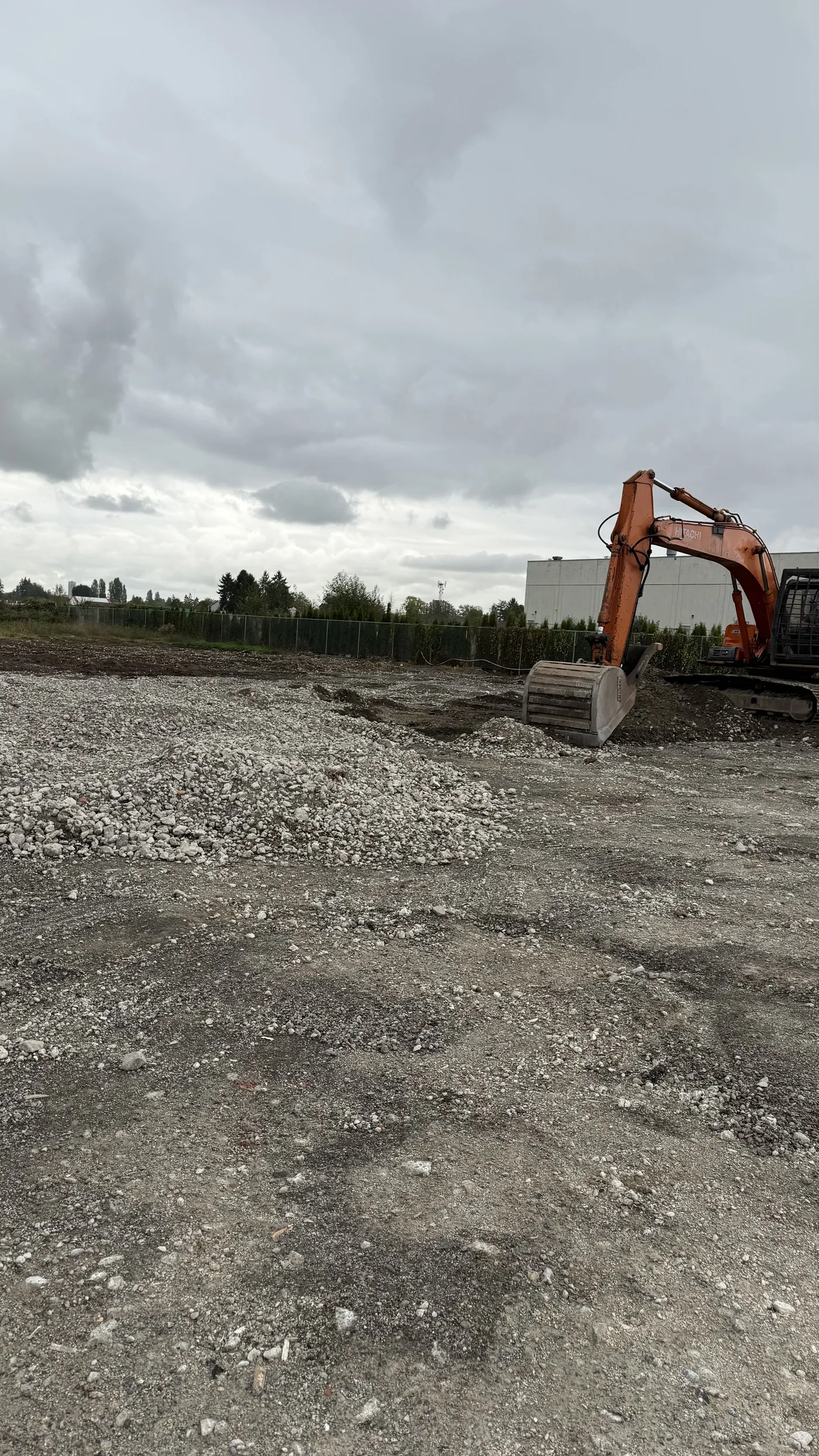
A Construction Environmental Management Plan tells the municipality how your project will protect soil, water, and neighbouring farmland while it is built, and it is increasingly a permit condition for work on or near the ALR. Titrin prepares P.Ag.-led CEMPs and agricultural impact mitigation plans for projects across the Lower Mainland, written for the specific site and backed by construction-phase monitoring.
What's included
- Construction Environmental Management Plans (CEMP) for projects on or near ALR land
- Agricultural impact assessments and mitigation plans for construction affecting farmland
- Sediment and erosion control coordination within P.Ag. scope, aligned with any standalone ESC plan
- Topsoil salvage, stockpile, and protection protocols
- Environmental monitoring during construction, with documented site visits
- Compliance reporting to municipalities and the ALC
- Coordination with R.P.Bio. partners where a site needs biology or riparian expertise
What a CEMP is
A Construction Environmental Management Plan (CEMP) is the working document that governs how environmental risk is managed while a project is built. It does not argue for the project; that case is made earlier, through assessments and permits. The CEMP starts where the approval ends, telling the contractor, the landowner, and the municipal reviewer exactly how soil, water, and neighbouring farmland will be protected from mobilisation through to final inspection.
On or near the Agricultural Land Reserve (ALR), a CEMP carries a second job: agricultural impact mitigation. Construction beside working farmland can compact soil, interrupt drainage patterns, and bury productive topsoil, leaving land less farmable than before. A CEMP prepared by a Professional Agrologist treats those risks as central to the plan, not as an afterthought behind the silt fence.
This page covers the CEMP as its own deliverable. For the broader family of environmental approvals it usually travels with, see our environmental management and assessment service.
When municipalities require one
A CEMP is almost always required by someone else, written into a permit or approval as a condition. Common triggers across the Lower Mainland:
- Construction on or adjacent to ALR land. The municipality wants assurance the agricultural resource is protected, and the ALC expects the same wherever its approvals apply.
- Utility and road works through farmland. Linear projects cross many properties and drainage paths; the CEMP keeps the protection standard consistent across all of them.
- Developments with an agricultural interface. Where a subdivision, institutional building, or commercial site backs onto farmland, the CEMP defines how that edge is managed during construction.
- Work near watercourses and ditches, where sediment control becomes a permit condition in its own right.
If you are planning a build on ALR land, our guide to building on ALR land in BC explains where the CEMP sits in the wider approval path.
What a credible CEMP contains
At a high level, a CEMP that a reviewer will accept and a contractor can actually follow sets out:
- Limits of work, drawn so machines stay off soil that does not need to be disturbed.
- Topsoil salvage and protection protocols: where topsoil is stripped, how it is stockpiled and kept separate from subsoil and fill, and how it goes back.
- Erosion and sediment control, coordinated with any standalone ESC plan and with the engineering design where one exists.
- Equipment, access, and staging rules that limit compaction on agricultural soil.
- Spill response and material handling procedures.
- A monitoring framework and reporting commitments, so compliance is documented rather than assumed.
Where past land use raises a contamination question, a Phase 1 ESA, a screening review of records and site conditions, often runs alongside the CEMP. Where land returns to farming afterwards, the plan should connect to a farm plan so reinstatement targets are agronomically real.
How Titrin approaches it
Titrin’s CEMPs are P.Ag.-led and farmland-specific. We describe topsoil condition, compaction risk, and drainage interfaces from field observation, within agrology scope, and write mitigation measures a contractor can implement without interpretation. Where a project needs structural, geotechnical, or detailed drainage design, that work is referred to a qualified engineer. Where ecology is in play, such as fish habitat or riparian vegetation, we deliver with our R.P.Bio. partners so every part of the plan carries the right professional sign-off.
We also stay on site. Through our construction monitoring and Agrologist on Record service, the agrologist who wrote the plan is the one checking it is followed, documenting compliance, and reporting to the municipality.
Why Titrin
Titrin AgriSoil Solutions is led by Tishtaar (Tish) Titina, P.Ag., M.Sc., a Professional Agrologist registered with the BC Institute of Agrologists, with more than a decade spanning the Agricultural Land Commission and the City of Richmond. We have reviewed these plans from the other side of the counter, so we know the difference between a CEMP that releases a permit and one that comes back with questions. Every plan is written for the site in front of us, and the P.Ag. who signs it walks the ground.
If your permit condition calls for a CEMP or an agricultural impact assessment anywhere in the Lower Mainland, book a consultation and we will scope exactly what your approval requires.